

If you slept through the burning bush last week, don’t feel bad. Most people did.
Buried beneath the daily avalanche of politics, markets, wars, celebrity scandals, and World Cup drama was one of the most important scientific advances in recent memory described in a remarkable new preprint from synthetic biologists at the University of Minnesota.
A few headlines claimed scientists had “created life.” That’s not exactly right, but something extraordinary did happen.
For nearly four billion years, every living organism on Earth has descended from another living organism. Every bacterium, oak tree, whale, mushroom, and human being traces an unbroken chain back to the earliest life on our planet. Life has always come from life.
The Minnesota team came closer than anyone before them to breaking that pattern.
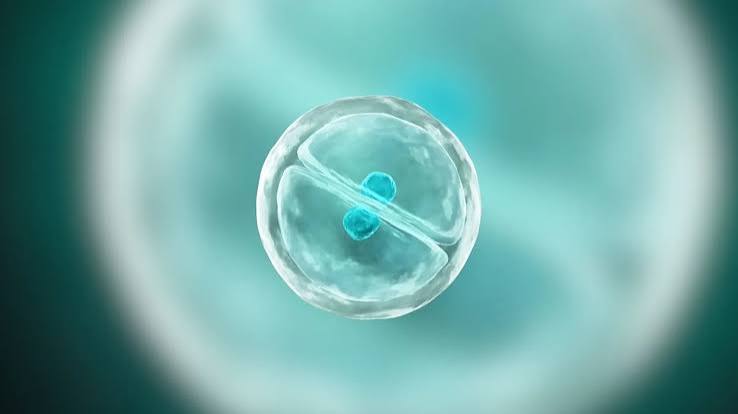
Their creation, nicknamed “SpudCell,” is not a modified bacterium whose genes have been edited or rearranged but a simplified synthetic cell assembled from carefully selected biological components—lipid membranes, ribosomes, enzymes, DNA, RNA, metabolic machinery, and dozens of purified molecular systems—organized into a chemically defined package capable of performing many of the core functions we associate with living cells.
Remarkably, these synthetic cells can absorb nutrients from their surroundings, generate chemical energy, manufacture proteins by translating genetic instructions, copy their DNA, increase in size, divide into daughter cells, and even undergo Darwinian selection, allowing more successful variants to outcompete less successful ones over successive generations.
That is an astonishing list.
At the same time, these cells remain dramatically less capable than even the simplest naturally evolved bacteria. They cannot survive outside carefully controlled laboratory conditions. They depend on molecular machinery supplied by researchers. Their metabolism remains primitive. They lack the extraordinary networks of regulation, repair, adaptation, environmental sensing, and long-term self-sufficiency that evolution spent billions of years building into even the humblest bacterial cell.
So did they create life?
I don’t think so.
Our challenge in answering that question is that nobody has ever come up with a universally satisfying definition of life. We tend to recognize it when we see it, but drawing a bright line turns out to be surprisingly difficult.
Whatever definition anyone may prefer, however, it seems fair to say this work moves humanity significantly closer to building living systems from the bottom up than ever before.
When I was writing Superconvergence, I explored some of the earliest efforts to create synthetic life. One celebrated breakthrough involved taking an ordinary E. coli bacterium and systematically replacing its DNA with chemically synthesized copies of exactly the same genetic sequence. It was an extraordinary technical accomplishment, but I described it as something of a parlor trick.
Like the Ship of Theseus, every piece had eventually been replaced, but nothing fundamentally new had been created. The brilliance belonged overwhelmingly to evolution. The scientists had copied nature with extraordinary precision, but they had not yet begun speaking biology with their own voice.
SpudCell represents a significantly different approach.
Instead of beginning with an existing living organism and modifying it, the researchers stripped biology down toward its essentials and rebuilt a much simpler cellular system capable of carrying out many of life’s core processes. They learned biology’s language from 3.8 billion years of evolution, but they are beginning to compose new sentences.
Evolution is unimaginably creative, but it is also unimaginably conservative. Every bacterium alive today carries billions of years of accumulated biological history. Evolution never starts over. It keeps modifying what already exists.
That history is both a strength and a constraint.
Today we routinely engineer E. coli bacteria to manufacture insulin, vaccines, industrial enzymes, food ingredients, fragrances, specialty chemicals, and biofuels. We engineer viruses by removing much of what makes them dangerous and replacing their genetic payloads so they can deliver life-saving gene therapies to patients with inherited blindness, sickle-cell disease, spinal muscular atrophy, and other devastating disorders.
These technologies are already changing the world.
But every time we modify bacteria or viruses, we are working against billions of years of evolutionary priorities. Those organisms evolved to survive, reproduce, compete, mutate, and spread, and not to manufacture medicines for us or faithfully carry therapeutic cargo exactly where we want it to go.
A stripped-down synthetic cell could eventually offer something evolution never produced: a biological chassis designed from the beginning for human purposes.
Imagine programmable cells built specifically to manufacture medicines. Others designed to detect and destroy early cancers before symptoms appear. Others engineered to clean polluted rivers, manufacture biodegradable plastics, capture atmospheric carbon dioxide, restore damaged soils, produce sustainable aviation fuel, grow food with dramatically fewer inputs, or manufacture entirely new materials impossible to make using conventional chemistry.
We are still very far from most of these applications, but we are no longer infinitely far away.
One of the reasons this breakthrough matters so much is that it is arriving at exactly the moment artificial intelligence is transforming biology itself. AI systems are rapidly becoming indispensable partners for designing proteins, predicting molecular interactions, optimizing metabolic pathways, interpreting genomic data, and increasingly helping scientists design biological systems that no human could have imagined on their own.
This is precisely the superconvergence I described in my book.
Artificial intelligence is making biology more programmable. Biology is making manufacturing more biological. Together they are accelerating one another. We are experiencing the emergence of biology as an engineering discipline.
That should fill us with hope as well as fear. It should also make us humble.
The same capabilities that may someday cure disease, regenerate ecosystems, and transform manufacturing could also lower the barriers to creating dangerous biological systems, widen global inequalities, and intensify geopolitical competition in ways we are only beginning to understand. As the science and technology advance at breathtaking speed, we must work just as urgently to advance public understanding, broaden public engagement, strengthen shared norms and standards, and build governance systems capable of keeping pace.
Because technology alone never determines our future. People do.
That has always been the central message of Superconvergence, and it is even more true today.
Our growing ability to engineer biology is one of the greatest opportunities our species has ever possessed. It may also become one of our greatest tests.
The essential question isn’t whether we will continue developing these extraordinary technologies. We will.
The real question is whether our wisdom, our institutions, and our values can evolve quickly enough to keep pace with our power.
If they can, the possibilities before us are almost beyond imagination. If they cannot, the dangers are equally profound.
Building our best possible future isn’t the responsibility of scientists, politicians, or entrepreneurs alone. It belongs to all of us.
—
About Jamie Metzl
Jamie Metzl is a leading AI keynote speaker, technology futurist, bestselling author, and former National Security Council official. The author of The AI Ten Commandments, Superconvergence, Hacking Darwin, and other books, Jamie helps organizations understand and navigate the profound transformations being driven by artificial intelligence, biotechnology, genetics, and other exponential technologies.
A globally recognized expert on AI, innovation, human flourishing, and the future of humanity, Jamie’s keynote presentations explore how leaders, organizations, and societies can harness powerful emerging technologies while remaining grounded in enduring human values. His audiences include Fortune 500 companies, healthcare organizations, universities, government agencies, industry associations, and global conferences seeking insight into AI strategy, the future of work, responsible innovation, and the opportunities and challenges of the Human + AI age.